

Gong vs Granola: My honest review after using both tools

Why does every meeting suddenly have an AI plus-one?
I've reached the point where taking my own meeting notes feels slightly ridiculous.
There are now plenty of tools willing to join a call, capture what happened, pull out the important bits, and save me from trying to remember whether that really useful comment came 12 or 42 minutes in.
Gong and Granola both make that list, but I'd be looking at them for very different reasons.
Gong is built around the conversations revenue teams have with prospects and customers. It captures those interactions and turns them into data that sales teams can use to understand deals, improve sales conversations, and get a clearer picture of what's happening across the pipeline.
Granola feels much closer to the meeting itself. It gives you an AI notepad where your own notes and the meeting transcript work together, helping you turn conversations into useful summaries and follow-up material, without a bot visibly joining the call.
So, which approach makes more sense?
Who will get the most out of Gong and Granola?
If you're choosing between Gong and Granola, I'd start with what you want to happen after the meeting ends.
Gong makes the most sense if those conversations are part of a revenue process.
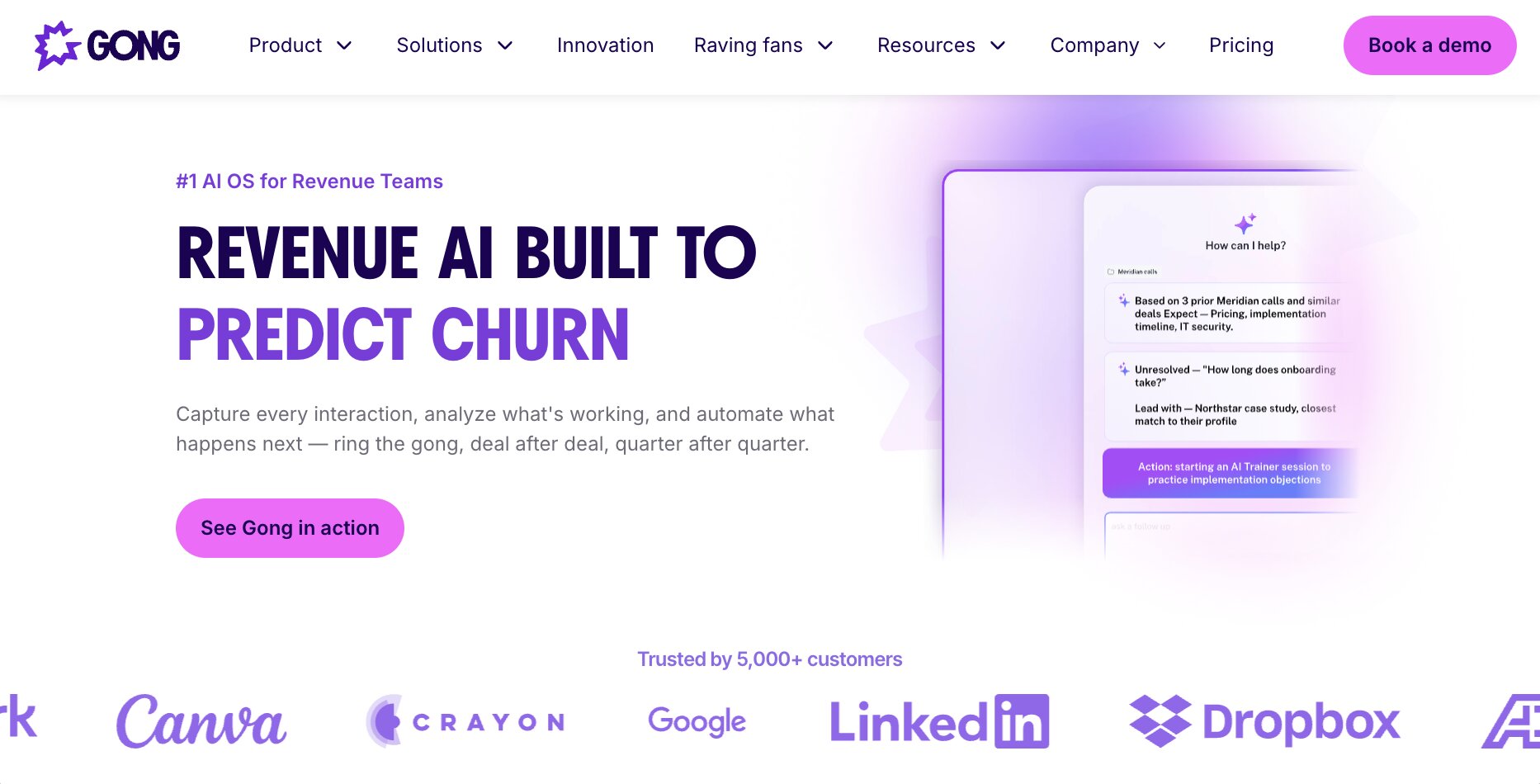
It's built for sales and revenue teams that want to capture customer interactions and use them to understand what's happening across deals, accounts, and the wider pipeline. Gong can surface buying signals and deal risks, automate CRM updates and follow-ups, support sales enablement, and feed conversation data into forecasting and other revenue workflows.
Granola is likely to appeal more if you mainly want better notes from the meetings you're already having.
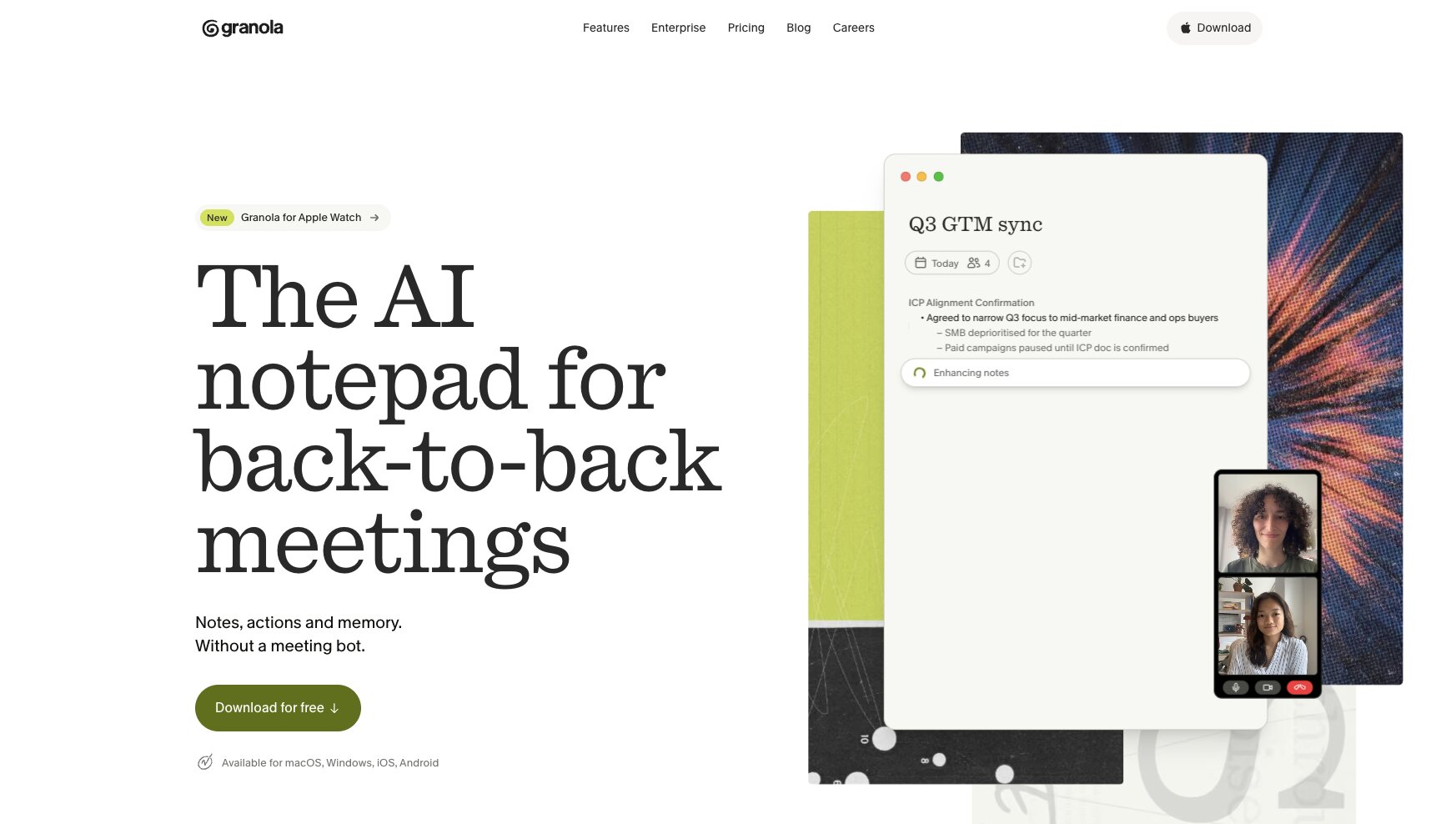
You take notes as normal, and Granola combines what you've written with the meeting transcript to flesh them out afterwards. That makes it useful well beyond sales calls too. Interviews, customer research, internal meetings, project discussions, and other conversations can all end up as organized notes without you having to capture every detail yourself.
Gong vs Granola: Top feature comparison
The biggest differences between Gong and Granola start to show once you look beyond the meeting notes themselves. Here's how I'd compare the two across the areas that matter most.
Meeting capture and transcription
Here's how both platforms handle transcripts:
Gong
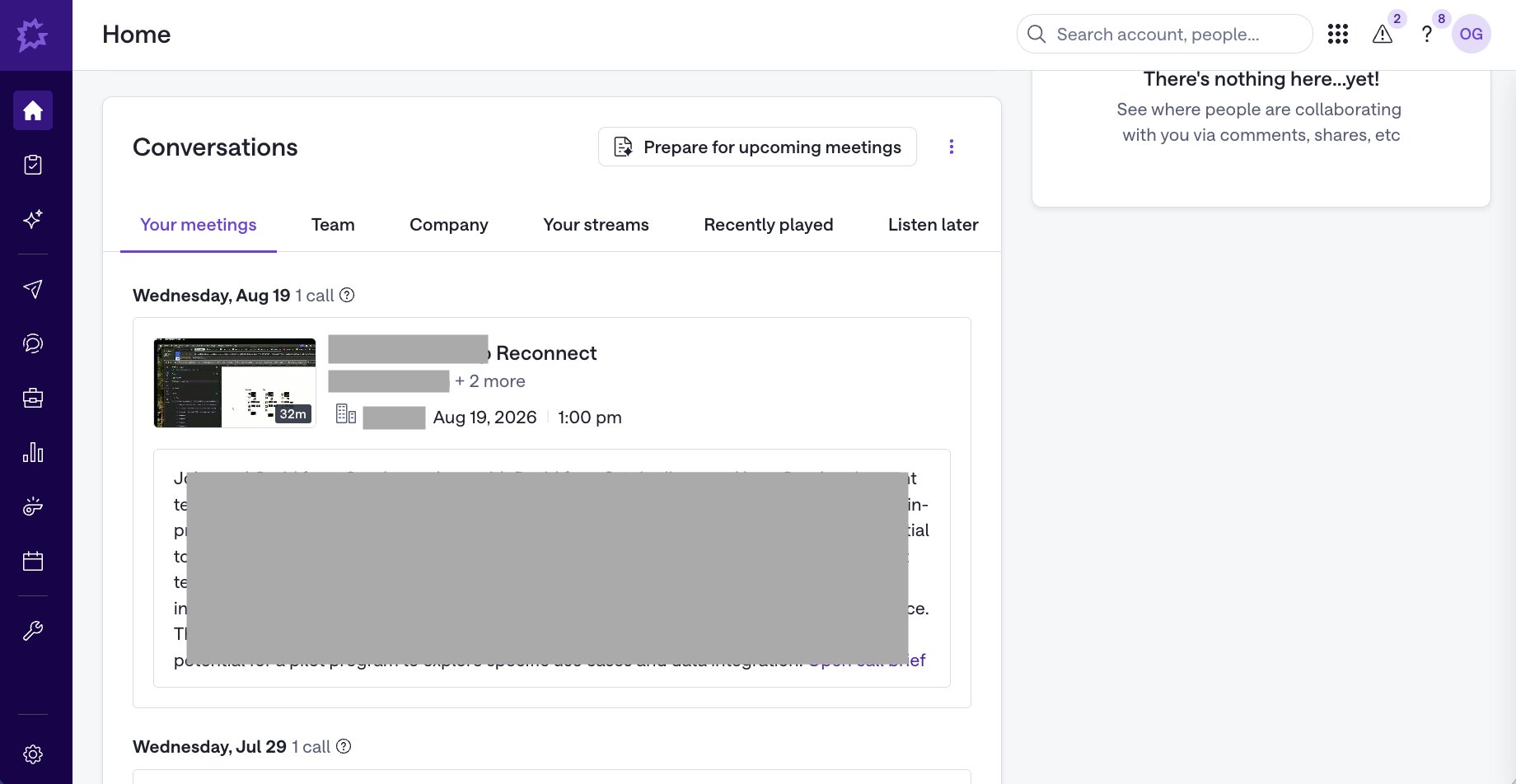
Gong is designed to capture customer interactions at scale. It records and transcribes sales calls and meetings, but can also bring emails and CRM activity into the picture. Its AI then analyzes those interactions for things like objections, competitor mentions, buying signals, and next steps.
For a revenue team, that gives you a much bigger dataset to work with than the notes from an individual meeting.
Granola
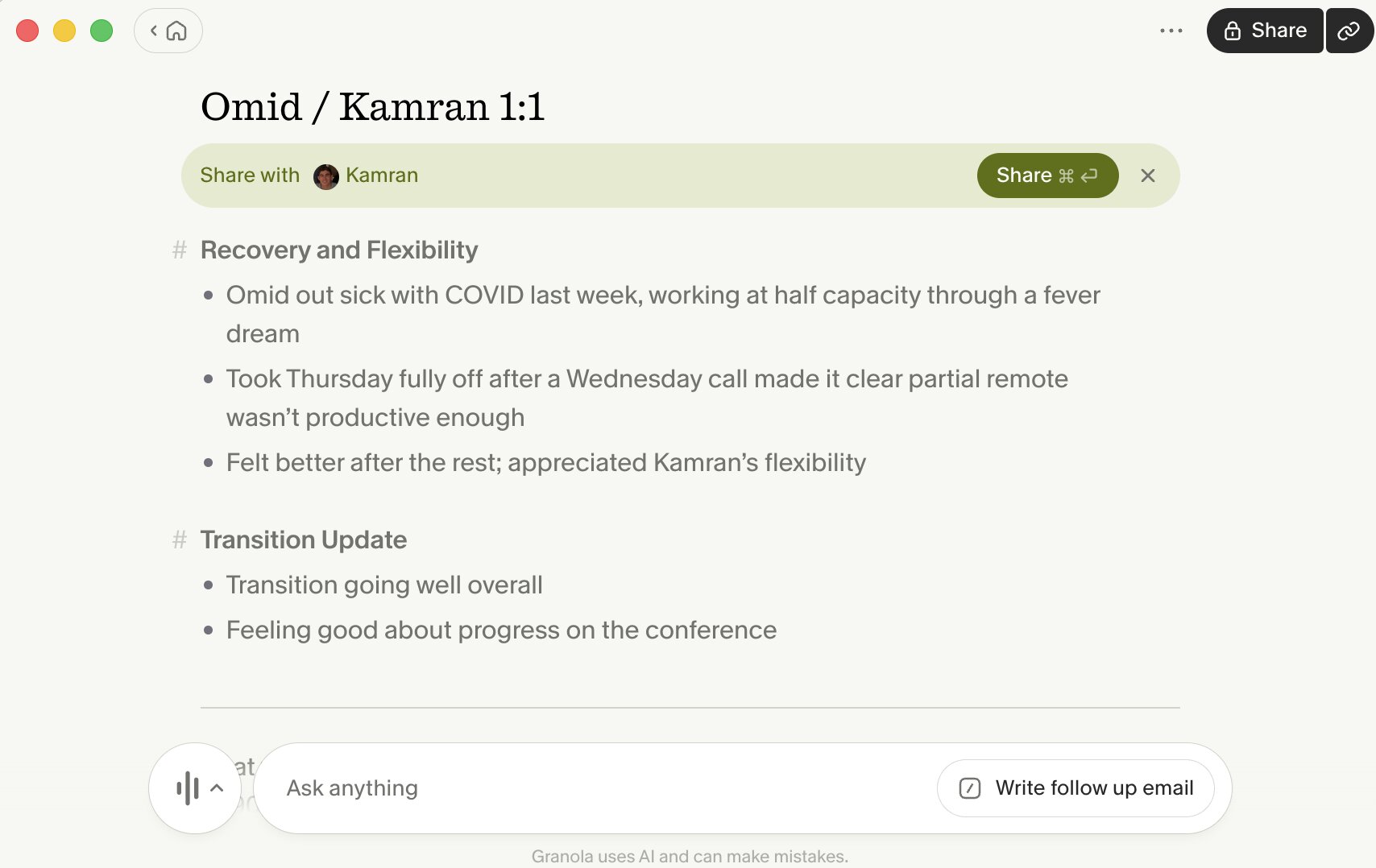
Granola takes a much lighter-touch approach. There's no bot joining the meeting and no audio or video recording saved afterwards. Instead, it uses your device's audio to transcribe the conversation in real time.
You can jot down as much or as little as you want while you're talking. Once the meeting ends, Granola combines those notes with the transcript and calendar context to create a more complete set of notes.
AI notes and meeting follow-up
Here's how both platforms handle follow-ups:
Gong
Meeting summaries are really the starting point for Gong. Its AI can pull out next steps, generate follow-ups, update CRM fields, and surface information from conversations that could affect a deal.
That makes the output particularly useful when a call needs to feed straight back into an established sales process.
Granola
Granola keeps the focus much more firmly on the notes themselves. Your own notes help guide what the AI produces, and you can then edit the result, ask questions about the conversation, pull out action items, or draft follow-up material.
I particularly like that the notes are private by default. You decide what gets shared rather than automatically sending a meeting summary to everyone who attended.
Conversation intelligence and analytics
Here's how both platforms handle analytics:
Gong
This is where Gong moves into very different territory.
Its conversation intelligence analyzes interactions across a revenue team to identify patterns and signals. Managers can use dashboards, scorecards, and recommendations to understand conversations and spot areas where sales performance could improve, while deal signals can feed into the wider pipeline and forecasting process.
Granola
Granola isn't trying to provide that same revenue intelligence layer. Its AI is there to help you make better use of the conversations you've personally captured.
You can search and ask questions across previous meetings, for example, which could be useful when you want to find a decision or pull together themes from a series of customer interviews.
Integrations and workflows
Here's how both platforms handle integrations:
Gong
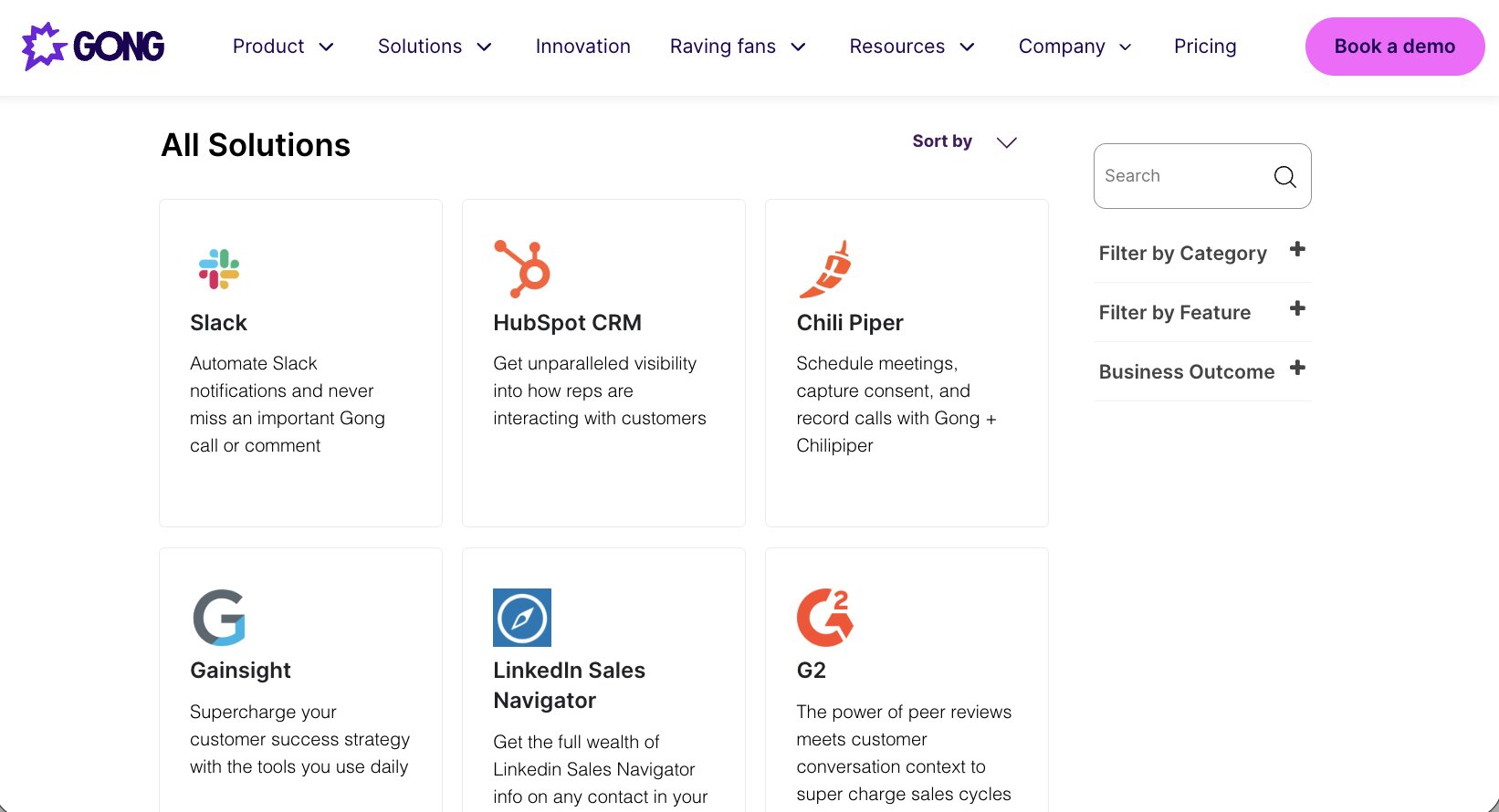
Gong's integrations reflect its revenue focus, connecting conversation data with the wider systems sales teams use to manage customers and deals.
The important distinction for me is what happens to that data next. Gong is built to turn customer interactions into inputs for CRM updates, follow-ups, deal management, forecasting, and other revenue workflows.
Granola
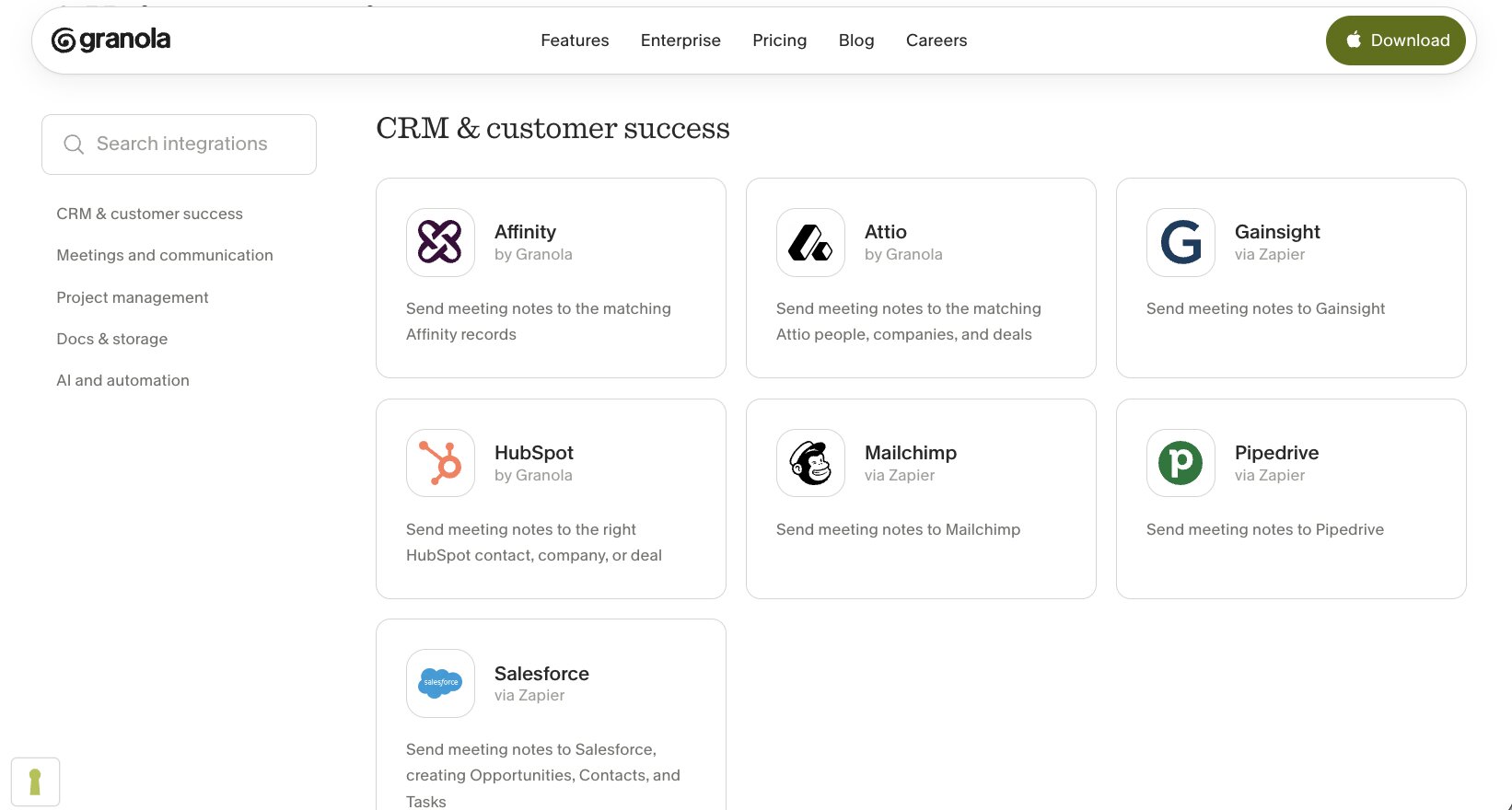
Granola has become much more connected than a simple notepad. It offers native integrations with tools including HubSpot, Attio, Affinity, Slack, Notion, and Gmail, while Zapier can send meeting information into thousands of other apps. Its MCP connector can also make your meeting notes available inside AI tools such as ChatGPT and Claude.
Gong vs Granola: Use case comparison
Features tell you what each tool can do. I find the use cases much more helpful for figuring out whether I'd actually want to use it.
Gong use cases
Gong really comes into its own when conversations need to influence what happens across a revenue team.
- Sales teams: Capture calls, identify buying signals and objections, keep CRM records updated, and spot deals that might be losing momentum. Managers can also use those conversations to understand what's working and where sellers might need support.
- Revenue leaders and RevOps teams: Bring customer interactions and CRM data together to track pipeline health, identify risks, and inform forecasting.
- Sales enablement teams: Use real conversations to identify successful messaging, understand what top performers are doing, and find areas where sellers could improve.
- Customer success teams: Analyze post-sale conversations to pick up potential renewal or expansion risks and keep a closer eye on existing accounts.
Granola use cases
Granola's use cases stretch much further beyond revenue because pretty much any useful conversation can become a set of searchable notes.
- Sales teams: Capture discovery calls and demos, draft follow-up emails, push notes into the CRM, and revisit previous conversations when preparing for the next meeting.
- Product and research teams: Capture user interviews and search across them for recurring themes, feedback, and insights without manually working through every transcript.
- Recruiting teams: Keep detailed interview notes without trying to type everything as candidates speak, then turn those conversations into more complete records afterwards.
- Consultants and customer-facing teams: Capture discussions, decisions, and next steps across client meetings and easily return to that context later.
- Internal teams: Keep track of 1:1s, planning sessions, project discussions, and other meetings where decisions and action items can otherwise disappear into someone's notebook.
Gong vs Granola: Pricing comparison
There's a pretty stark difference in how easy it is to work out what these two tools will cost you.
Gong pricing
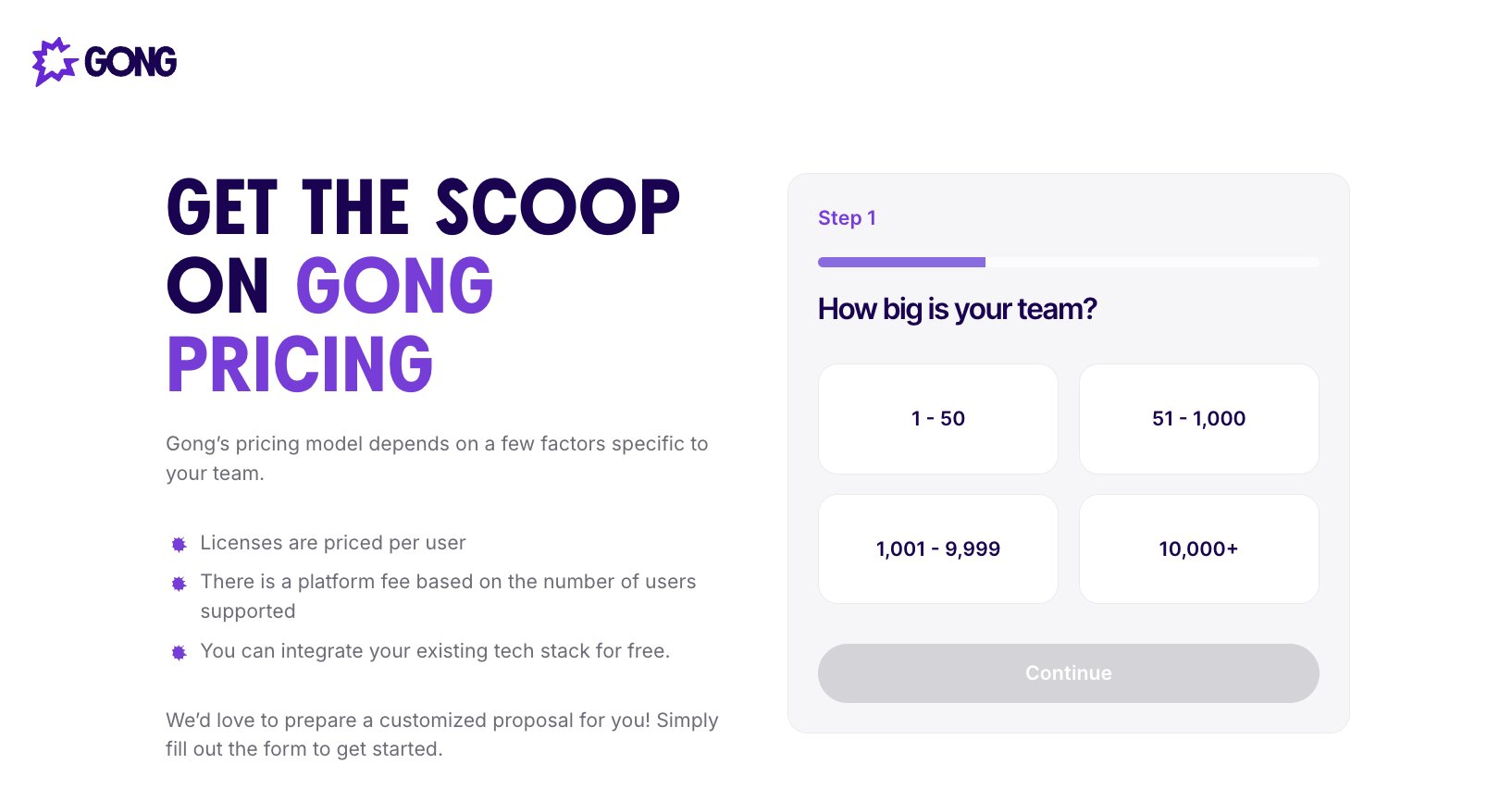
Gong doesn't publish fixed prices on its website. Instead, pricing is tailored to your team and has two main components:
- Per-user licenses
- Platform fee: Based on the number of users you're supporting
Integrations with your existing tech stack are included at no additional cost. To get an actual figure, though, you'll need to give Gong your team size and request a customized proposal.
That makes it harder to price up before talking to sales, particularly if you're still at the early comparison stage.
For the latest details, check out Gong's pricing page.
Granola pricing
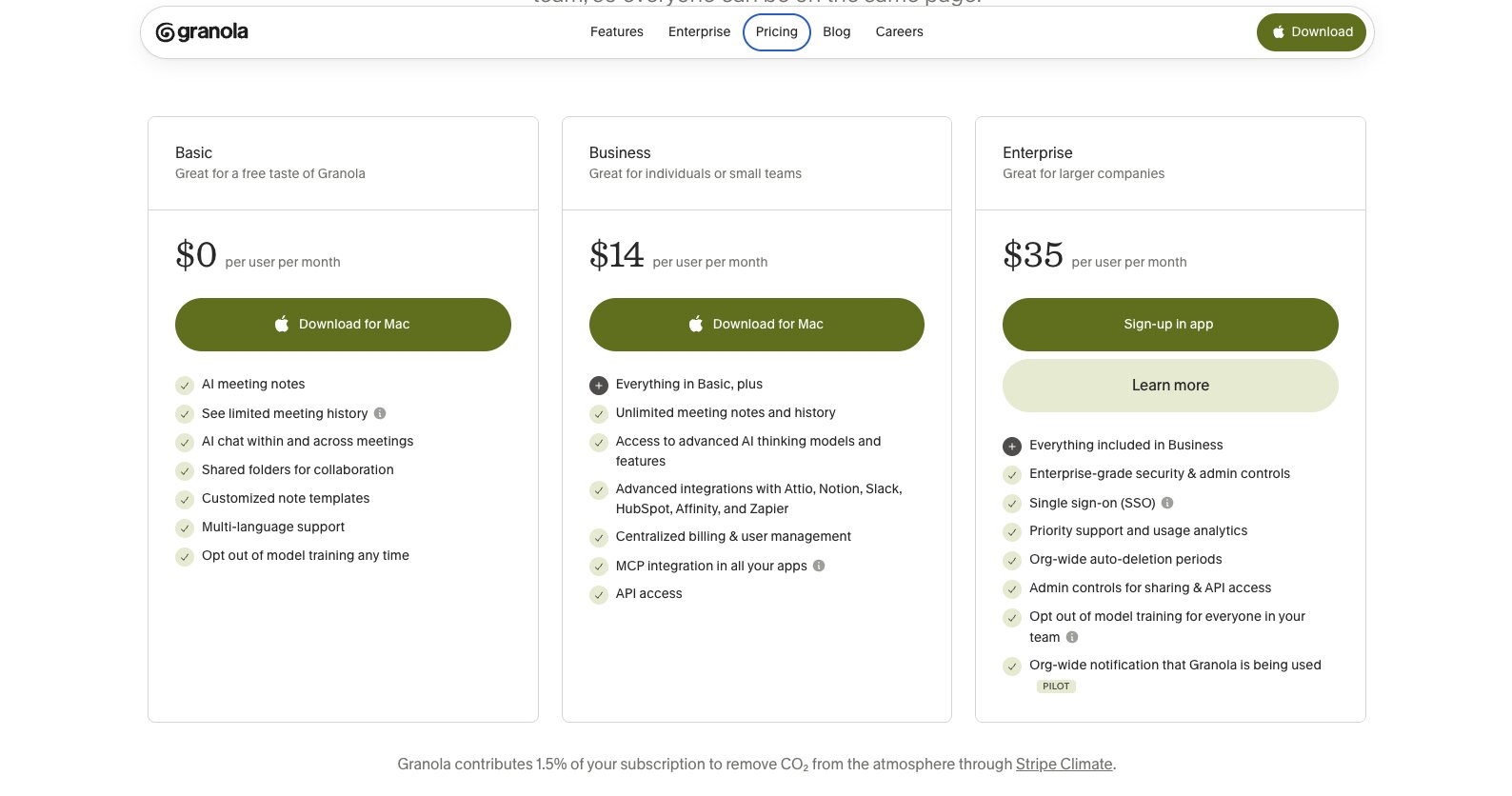
Granola is much more transparent:
- Basic: $0/user/month: AI meeting notes, limited meeting history, AI chat, shared folders, customizable note templates, and multi-language support
- Business: $14/user/month: Adds unlimited meeting notes and history, advanced AI models and features, integrations, centralized billing, MCP integration, and API access
- Enterprise: $35/user/month: Adds enterprise security and admin controls, SSO, priority support, usage analytics, organization-wide auto-deletion, and additional sharing and API controls
The free Basic plan makes Granola particularly easy to try before deciding whether the additional history, integrations, or administration features justify moving onto a paid plan.
For the full breakdown, check out Granola's pricing page
Gong vs Granola: Pros and cons
By this point, the trade-offs between the two are fairly easy to see. Here's what I'd weigh up before choosing either one.
Gong pros and cons
Pros
- Goes much further than simply meeting notes with conversation intelligence, deal insights, forecasting, and revenue workflows
- Gives sales leaders visibility across customer conversations rather than leaving insights buried in individual calls
- Connects meeting data with CRM activity and the wider revenue process
- Strong fit for larger sales organizations that want to analyze conversations at scale
Cons
- No public pricing makes it difficult to estimate costs without speaking to sales
- Far more functionality than you need if you're primarily looking for an AI meeting notetaker
- Revenue focus makes it less relevant for general internal meetings and teams outside sales and customer-facing functions
Granola pros and cons
Pros
- Bot-free approach makes meetings feel more natural
- Combines your own notes with AI-generated detail rather than replacing them completely
- Useful across sales, research, recruiting, customer calls, and internal meetings
- Free plan and transparent paid pricing make it easy to try and compare costs
Cons
- Doesn't offer Gong's depth of revenue intelligence, pipeline analysis, or forecasting
- Less suited to organizations that want to analyze sales conversations across an entire revenue team
- Some of its more useful workflow features, including integrations and API access, require a paid plan
You don't have to choose: Use Gong and Granola with Gumloop
There's another option here if different teams have different ideas about what they need from their meetings: don't force everyone onto the same tool.
Your revenue team could use Gong for sales calls and conversation intelligence, while product, research, recruiting, or other teams use Granola to capture the conversations that matter to them. Gumloop can then help you put the information from either tool to work elsewhere.
Both Gong and Granola have MCP integrations with Gumloop, so you can bring their meeting data into broader AI agents and automated workflows.
With Gong, that could mean:
- Pulling call transcripts into an agent for analysis
- Drafting follow-up emails based on what happened during a call
- Updating CRM records with relevant customer information
- Sharing call insights with the right people in Slack
Gumloop even has a dedicated AI Gong Agent built around turning Gong conversations into follow-up actions.
Granola opens up a different set of possibilities. A Gumloop agent can search your meeting notes and retrieve information from previous conversations, so you could use that context to kick off work in other tools without manually digging through old notes.
For me, that's a much more interesting way to think about the comparison. Gong and Granola can each stay focused on the meetings they're best suited to, while Gumloop gives you somewhere to build the workflows that happen around them.
Gong vs Granola: What do customers say?
I always like to look beyond the feature lists and see what people actually think once they've been using a tool for a while. Gong has a much larger body of customer feedback to draw from, while Granola's review pool is smaller but growing.
Gong reviews
- G2: 4.7/5 stars (from 6,679+ reviews)
- Capterra: 4.8/5 stars (from 561+ reviews)
There's a huge amount of feedback to work with here. Gong users often shout about its ability to record, transcribe, and summarize customer conversations, alongside the insights it provides for sales teams. Ease of use, call recording, AI summaries, and accuracy all feature prominently in positive G2 feedback.
The amount of functionality can also work against it. Some reviewers find the interface overwhelming, while recording issues and occasional AI inaccuracies are among the drawbacks that appear in the feedback.
Granola reviews
- G2: 4.7/5 stars (from 35+ reviews)
- Product Hunt: 4.8/5 stars (from 53+ reviews)
Granola's reviews reinforce a lot of what I like about the product on paper. Users regularly mention being able to stay focused on the conversation rather than worrying about taking notes, while the quality of its summaries, action items, and simple setup also gets plenty of praise. The bot-free approach comes up positively across both G2 and Product Hunt too.
There are some limitations in the feedback. Users mention occasional transcription inaccuracies and speaker identification issues, while others would like better integrations and more ways to trigger actions directly from their notes. Product Hunt reviewers also raise some mobile and account connection frustrations.
With fewer than 100 reviews across the two platforms, I'd still treat Granola's ratings with a little more caution than Gong's. But the consistency of the feedback gives us a useful picture of what users value most: unobtrusive note-taking, strong summaries, and being able to stay present in meetings.
Gong vs Granola: Which one should you choose?
After digging into both, I don't think this decision really comes down to which one takes better meeting notes. The bigger question is what you need to happen around the conversation itself.
I'd choose Gong if you're part of a revenue organization that wants meeting data to feed into a much bigger sales process. It gives you the conversation intelligence, deal visibility, analytics, and forecasting capabilities to understand what's happening across customer interactions at scale. For sales leaders and RevOps teams in particular, there's a lot more to work with than a transcript and summary.
I'd choose Granola if you want a genuinely useful AI notetaker that can follow you into pretty much any meeting. It's simpler, considerably more transparent on price, and the bot-free experience is a big plus if you don't need all the revenue machinery surrounding Gong. Product interviews, internal meetings, recruiting calls, sales conversations — Granola doesn't really care what kind of meeting you're having.
And, as we covered earlier, larger organizations don't necessarily need to make this an either/or decision. Gong can sit with the revenue team, Granola can cover meetings elsewhere, and Gumloop can help turn the information captured in either platform into wider automated workflows.

Read related articles
Check out more articles on the Gumloop blog.